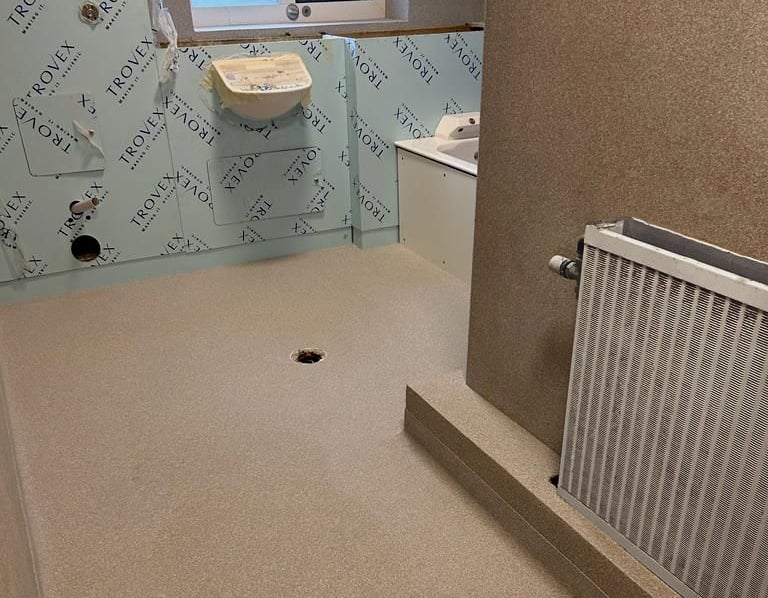

For facilities managers in the healthcare sector, selecting the right flooring is a complex decision where patient safety, infection control, durability and cost must all be carefully balanced. The ideal hygienic flooring must provide a seamless, non-porous surface that withstands constant chemical cleaning while also offering comfort and acoustic dampening.

This guide compares the leading healthcare flooring solutions to help you make an informed choice for your specific clinical environment. The choice affects everything from regulatory audit performance in operating theatres to patient comfort in wards. Ignoring the specific needs of each area, from high-traffic corridors to sterile laboratories, can lead to rapid material failure and severe infection control risks, proving that the floor is truly your first line of defence. Here’s what you need to know.
1. Resin Systems: The Hygienic Flooring Gold Standard
Resin flooring (primarily epoxy and polyurethane systems) is often considered the gold standard for areas demanding the highest levels of sterility, such as operating theatres, labs and clean rooms. Their key benefit is creating a monolithic and completely seamless surface.
Epoxy systems are highly durable and chemically resistant, making them excellent for laboratories, kitchens and high-traffic corridors where equipment and strong cleaning agents are common. They are renowned for offering extreme hardness. Conversely, polyurethane systems are often preferred for wards and patient rooms because they offer greater elasticity and a softer feel, providing enhanced acoustic properties and underfoot comfort. This makes polyurethane a superior healthcare flooring choice in areas where patient well-being is a priority.
The primary advantage of these healthcare flooring solutions is the total lack of joints or grout lines, eliminating areas where pathogens can thrive and guaranteeing a fully hygienic flooring system. Resin systems offer excellent infection control due to their 100% seamless nature and boast an excellent durability and lifespan, often lasting 15 or more years. They also handle high thermal resistance from steam and hot water well.
2. Vinyl and Linoleum: Practical Healthcare & Medical Flooring
Vinyl and linoleum remain popular healthcare and medical flooring options due to their cost-effectiveness, design flexibility and ease of installation, making them suitable for non-critical areas like offices, waiting rooms and corridors.
Modern hospital-grade vinyl (PVC) flooring is non-porous and highly resistant to scuffs and stains, available in sheet or tile form. Sheet vinyl minimises seams, supporting better infection control than tiles. Linoleum, made from natural materials, is considered environmentally friendly and offers inherent bacteriostatic properties.
These materials are typically used in wards, offices and waiting areas. Their durability is generally good, lasting 10 to 15 years. However, sheet vinyl is susceptible to warping from high thermal exposure, and any seams can break down over time, requiring vigilant maintenance. While these options provide aesthetic flexibility, they require careful installation and sealing to ensure their hygienic flooring properties are maintained, particularly at the joints.
3. Maintenance and Longevity of Healthcare Flooring
The long-term performance of your healthcare flooring relies heavily on strict adherence to specialised maintenance protocols. All materials require neutral cleaning agents, but their vulnerability to chemicals varies.
Resin systems generally offer the highest chemical resistance to powerful disinfectants and cytotoxic drugs. Vinyl and linoleum can degrade or fade if exposed to harsh, solvent-based chemicals frequently.
In terms of repairability, resin floors are easily patch-repairable, so local damage can be addressed without replacing the entire floor, a significant advantage in large facilities. Vinyl often requires cutting out and replacing entire sections, potentially compromising the surrounding seams.
In high-traffic corridors, healthcare and medical flooring must dampen noise. Polyurethane systems are specifically engineered to provide a softer, quieter environment, contributing directly to patient recovery and staff comfort. Choosing the right healthcare flooring system ensures that the environment supports infection control policies without incurring unnecessary maintenance costs or risks.
4. Why Seamless is Essential for Infection Control
For critical clinical settings like operating rooms, the absolute elimination of seams and joints is the single most important factor in preventing Healthcare-Associated Infections (HAIs).
The investment in a seamless healthcare flooring solution like resin delivers better lifecycle value by eliminating the risks and costs associated with bacterial ingress and frequent replacement. Resin systems achieve total encapsulation of the substrate, meaning no cleaning solution, fluid or bacteria can penetrate the surface. This level of
protection, particularly where spillages of blood or pharmaceuticals are common, makes seamless resin an unparalleled choice for maintaining a truly sterile environment.
To find out more about how to choose the right kind of healthcare flooring solutions for your facility, get in touch with a member of our expert team here at Central Flooring Services. Contact us today to arrange a confidential site assessment, and we will provide tailored, compliant recommendations for every zone, from operating theatres to patient wards.

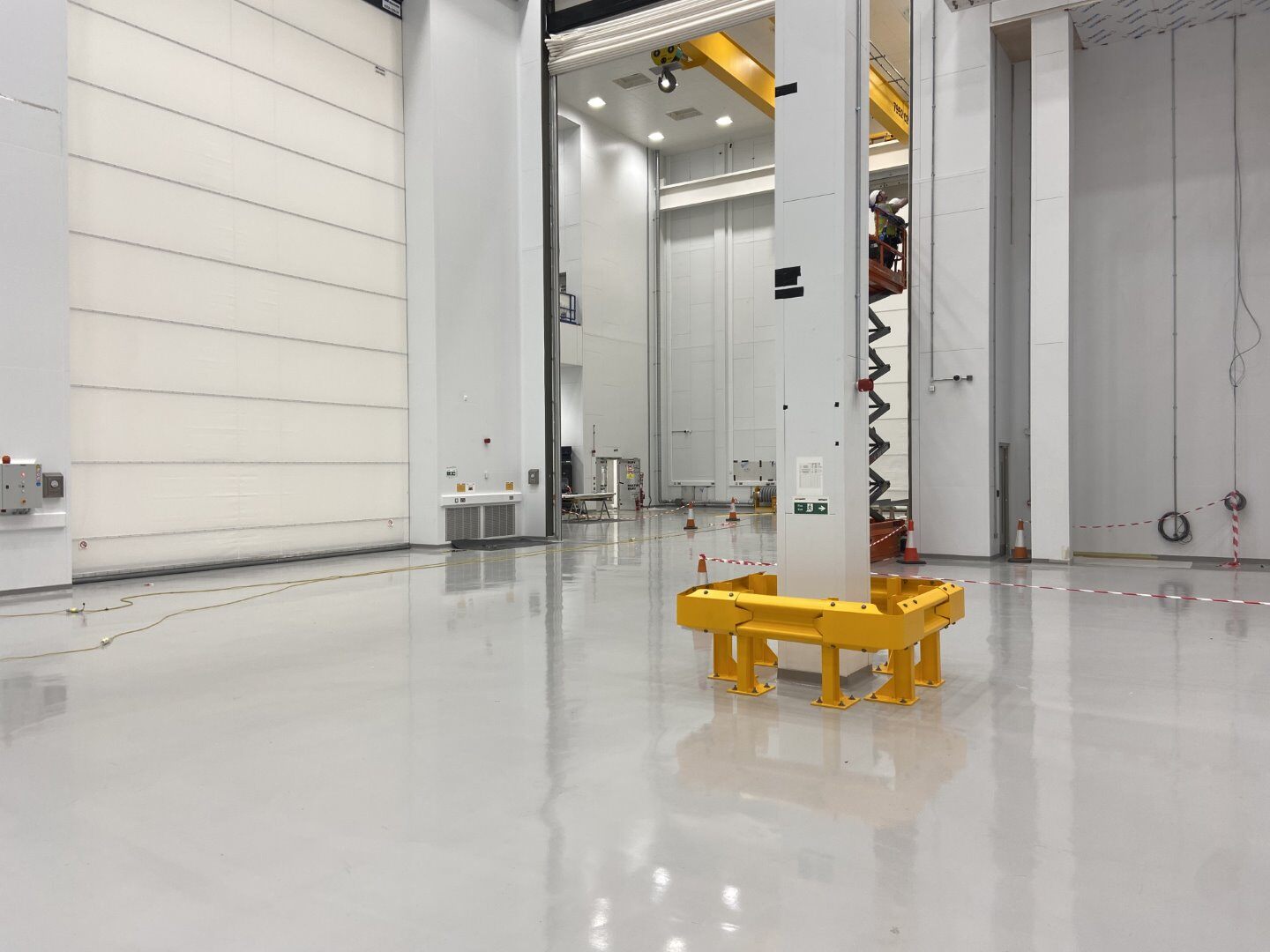
Central Flooring installs anti-static flooring system for Mace at Harwell Innovation Campus
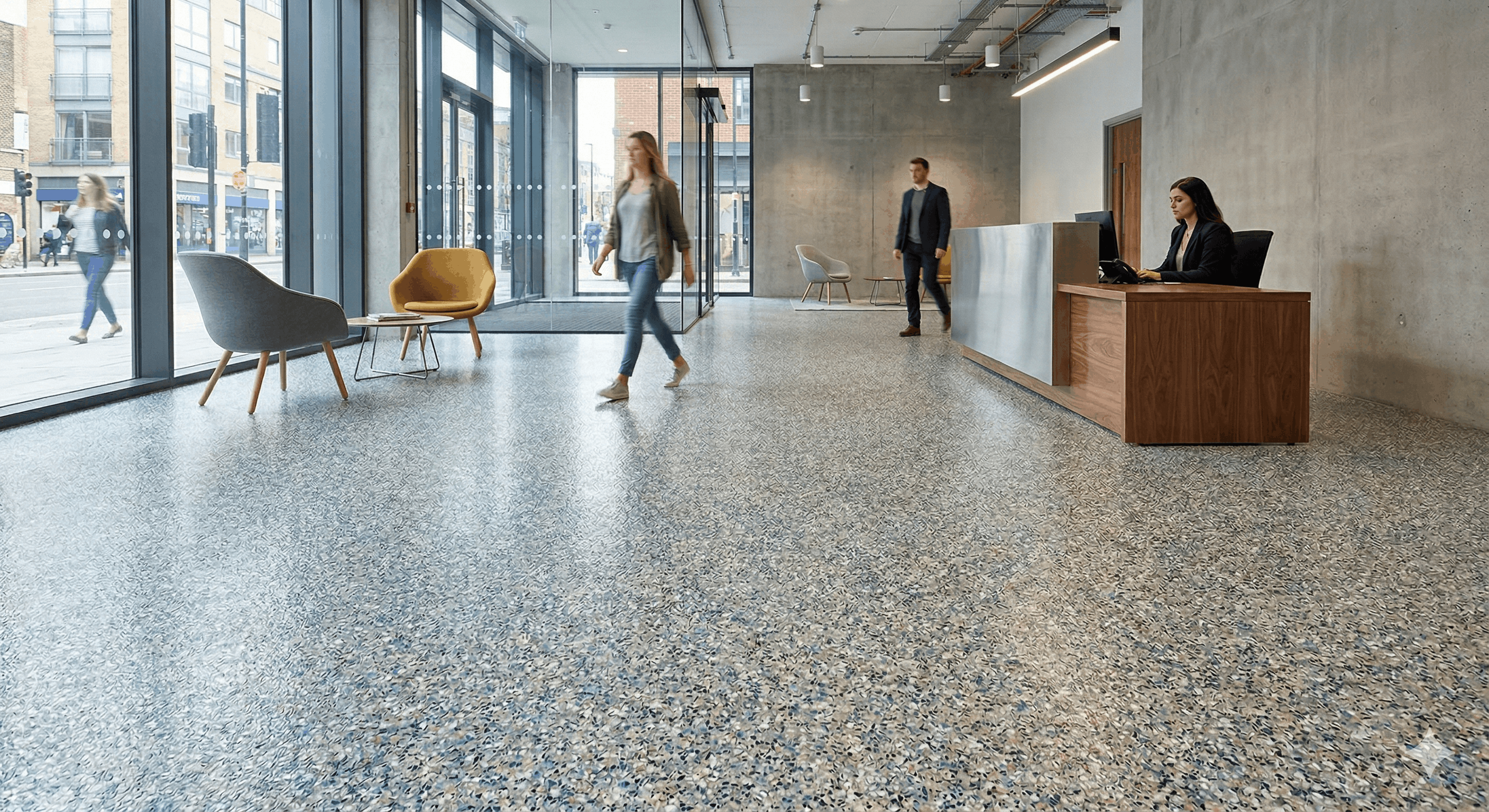
The Ultimate Guide To Maintaining Your Quartz Resin Flooring