
For facilities managers in the food and beverage sector, the floor is the undeniable foundation of hygiene and compliance. Selecting and maintaining suitable food grade flooring is crucial for preventing microbial contamination, avoiding regulatory fines and ensuring strict adherence to HACCP standards.

The checklist below provides a practical guide to the essential factors you must address when specifying, installing and maintaining a high-performance food safe flooring system in your facility, guaranteeing operational integrity and public safety.
1.Compliance and Certification Requirements
The first and most critical step in specifying any food grade flooring system is ensuring the chosen material meets all relevant UK food safety standards and is proven to be non-toxic and non-tainting. Floors in this sector must be entirely inert, supporting stringent sanitation processes without posing a chemical risk.
Your initial food grade flooring checklist must begin with regulatory verification:
- Non-Porous and Impervious: The material must be completely seamless and non-absorbent. This is vital to prevent the ingress of liquids, contaminants, bacteria and debris into the concrete substrate, which would compromise the structural safety and hygiene of the entire facility.
- HACCP Compliance: You must ensure the flooring material directly supports your site's Hazard Analysis and Critical Control Points (HACCP) system by being easy to clean, sterilise and sanitise effectively.
- Non-Tainting Status: The flooring material must be verified not to leach chemicals or taint foodstuffs, a fundamental requirement for any certified food safe resin.
The gold standard in this sector is often a heavy-duty polyurethane resin. Its dense, non-porous structure and exceptional durability make it an ideal food safe resin for the constantly wet, aggressive environment of food manufacturing and processing.
2. Durability and Thermal Performance
Food production environments are routinely subjected to extremely high temperatures from cooking, rapid cooling processes and intense thermal shock generated by powerful steam cleaning and hot water washdowns. A robust food grade flooring system must be engineered to handle these physical and thermal extremes without cracking, delaminating or degrading, which could expose the underlying concrete.
Check the following critical performance points:
- Thermal Shock Resistance: The floor must be able to withstand rapid temperature changes without failing. For areas like blast freezers, ovens or intensive wash stations, you need systems specifically designed to handle swings from over 80°C (steam cleaning) to below 0°C (freezing) instantly.
- Mechanical Strength: Assess the system's resistance to impact, point loading and severe abrasion from heavy foot traffic, steel wheels, pallet trucks and forklifts. A thick, high-strength food grade epoxy flooring or polyurethane screed is usually essential in high-traffic primary processing and washdown areas.
- Chemical Resistance: The floor must chemically resist the strong acids (found in fruit processing), alkalis, animal fats and oils found in food processing, as well as the powerful cleaning chemicals used during sanitation cycles. This chemical integrity is vital to maintaining the long-term performance and efficacy of the food safe flooring.
3. Hygiene Design and Safety Features
Beyond the material itself, the physical design and application of the food grade flooring system are absolutely paramount for maintaining a sterile environment and preventing costly workplace accidents. Professional attention to detail in the installation phase is what guarantees success.
Key design elements to include:
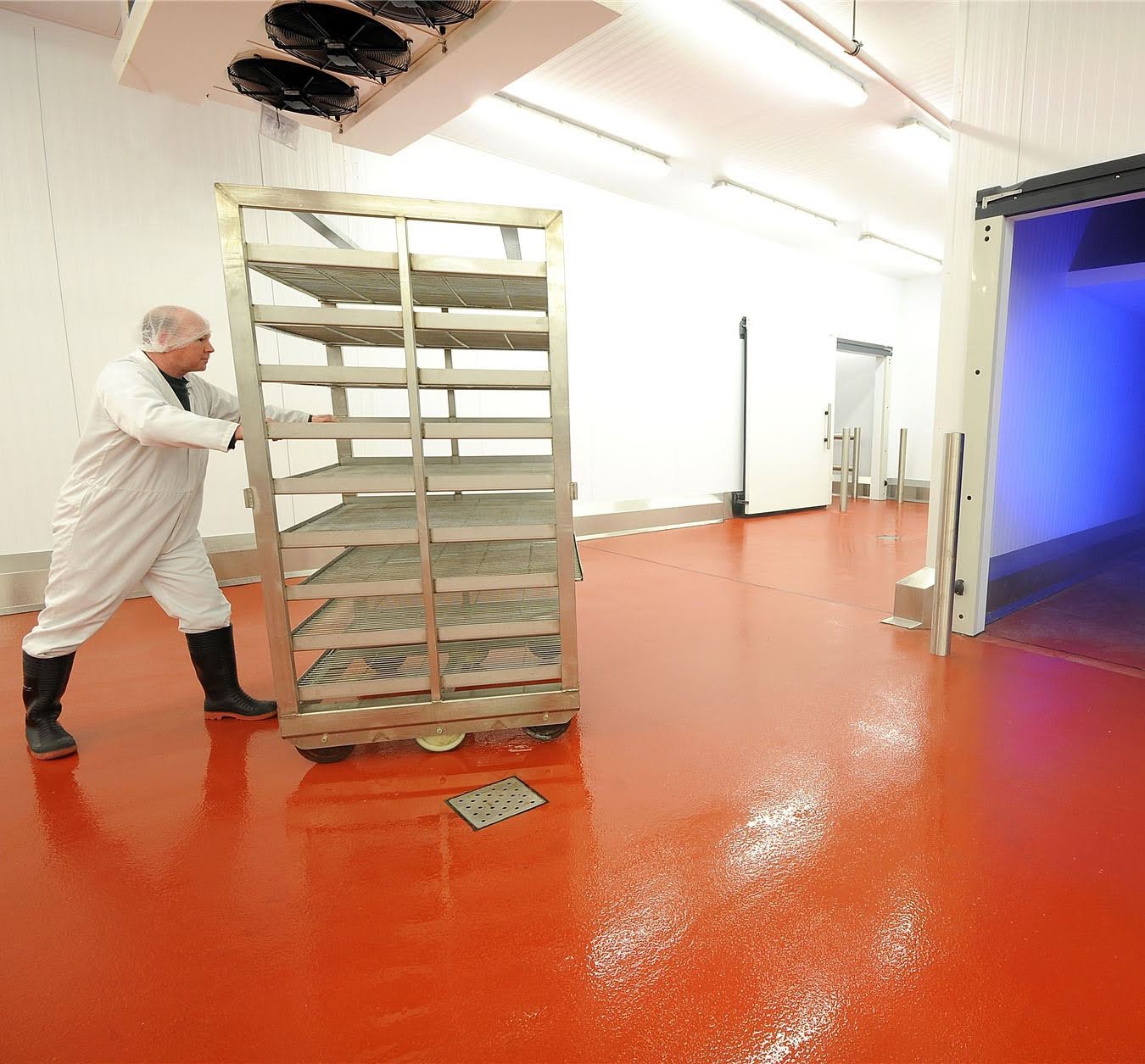
- Seamless Coving: Ensure the floor transitions seamlessly up the wall (known as coving). This essential design element eliminates the 90-degree corner, which is a prime location for stagnant water, dirt and bacteria to collect, significantly enhancing the site's overall hygiene control.
- Defined Drainage: The floor must be laid to effective falls (slopes) leading directly to appropriately sized stainless steel drainage channels to prevent pooling water. Standing water, even shallow puddles, is a major food safe flooring risk for both microbial growth and safety.
- Slip Resistance: Specify a non-slip profile precisely tailored to the wetness and foot traffic of the area. The surface must provide adequate traction (measured by PTV) for safety but cannot be so coarse that it becomes impossible to clean and sterilise effectively.
For contractors and facilities managers, choosing a specialist food grade epoxy flooring installer, such as Central Flooring Services, ensures these critical technical elements are managed expertly and comply with all regulatory requirements.
4. Maintenance and Longevity
The true cost of food grade flooring isn't the initial installation price, it’s the long-term cost of maintenance, repair downtime and eventual replacement. Choosing a durable system ensures maximum operational lifespan and the lowest overall lifetime costs.
- Ease of Cleaning: The seamless, non-porous nature of high-quality food safe resin floors makes them inherently easy to clean, dramatically reducing the time, water consumption and chemical resources needed for sanitation cycles.
- Repairability: Resin systems are highly repairable. Minor damage, impact points or localised wear can often be patched or resurfaced without needing to replace the entire floor section, minimising costly operational downtime.
- Lifecycle Planning: Work closely with your contractor to establish a preventative maintenance schedule. Regular inspection can catch small issues, such as minor cracking or surface erosion, before they compromise the integrity of the food grade flooring system and potentially lead to costly compliance failures.
Secure Your Facility’s Compliance with Expert Food Safe Flooring Advice
To find out more about how to choose the right kind of industrial food safe flooring, get in touch with a member of our expert team here at Central Flooring Services. Book your free, no-obligation site survey today. We provide tailored recommendations to meet specific regulatory requirements and ensure maximum operational efficiency for your business.


Why An Industrial Resin Floor Is The Best Solution For Manufacturers
What Type Of Flooring Is Ideal For The Food Manufacturing Industry